Ever found yourself stuck in repetitive patterns, yearning to break free from predictable sequences? In my latest video, I dive deep into a technique that's become a cornerstone of my creative process: using randomized modulation to create evolving, organic patterns in Ableton Live.
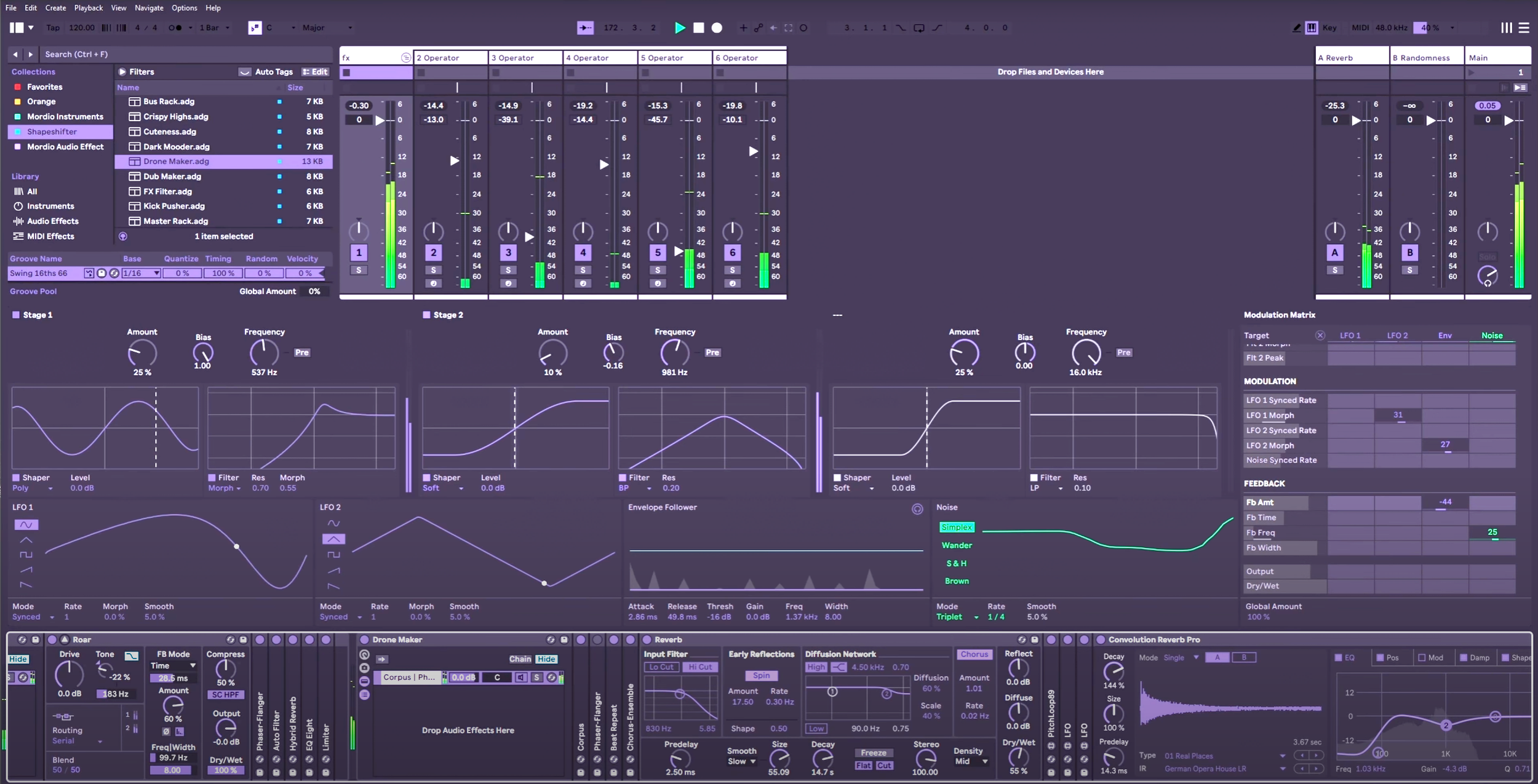
The heart of this approach lies in what I call "modulation heaven" - a carefully crafted system of LFOs mapped to faders that breathe life into static patterns. Here's where things get interesting: by setting up five channels with varying pattern lengths and capping our randomized LFOs at 80%, we create a sweet spot between chaos and control. This isn't just random button-pushing; it's about crafting a framework where unexpected variations can flourish while maintaining musical coherence.
One of my favorite discoveries in this process was setting up three LFOs in random mode on a return channel. It's a simple setup that yields complex results - perfect for those moments when you need to break through creative barriers without getting lost in endless tweaking.

The percussion element we build in the video showcases how these techniques can transform basic sounds into dynamic, evolving textures. By modifying decays, introducing noise, and leveraging randomizer tools, we create percussion that feels alive, responding to the natural ebb and flow of your track.
What really excites me about this approach is its potential for generative music. Recording in session view becomes an exploration rather than a fixed process, with each take offering new possibilities and happy accidents waiting to be discovered.

Remember, these techniques aren't about replacing your creativity - they're tools to enhance it. Start with these basic concepts, then make them your own. Experiment, break things, and find your sound in the beautiful chaos of randomized patterns.
And if you're looking to expand your sound palette, check out my sound packs that complement these techniques perfectly.
How do you use randomization in your music? Share your experiences in the comments below, and don't forget to join our Discord community where we explore these concepts further.