Slink Filter as a standalone VST plugin — sounds cool, but is it actually different from the Max for Live device? I've been using the [[original Slink]] in my productions for a while now, so when I got early access to the VST version, I had to find out. And honestly, this isn't just a port. They rebuilt the engine from scratch, added features that make the Max for Live version look dated, and opened it up to every DAW out there.
Here are the 6 things that changed — and why I think the VST is a genuine evolution of one of the [[most unique filter plugins]] available.
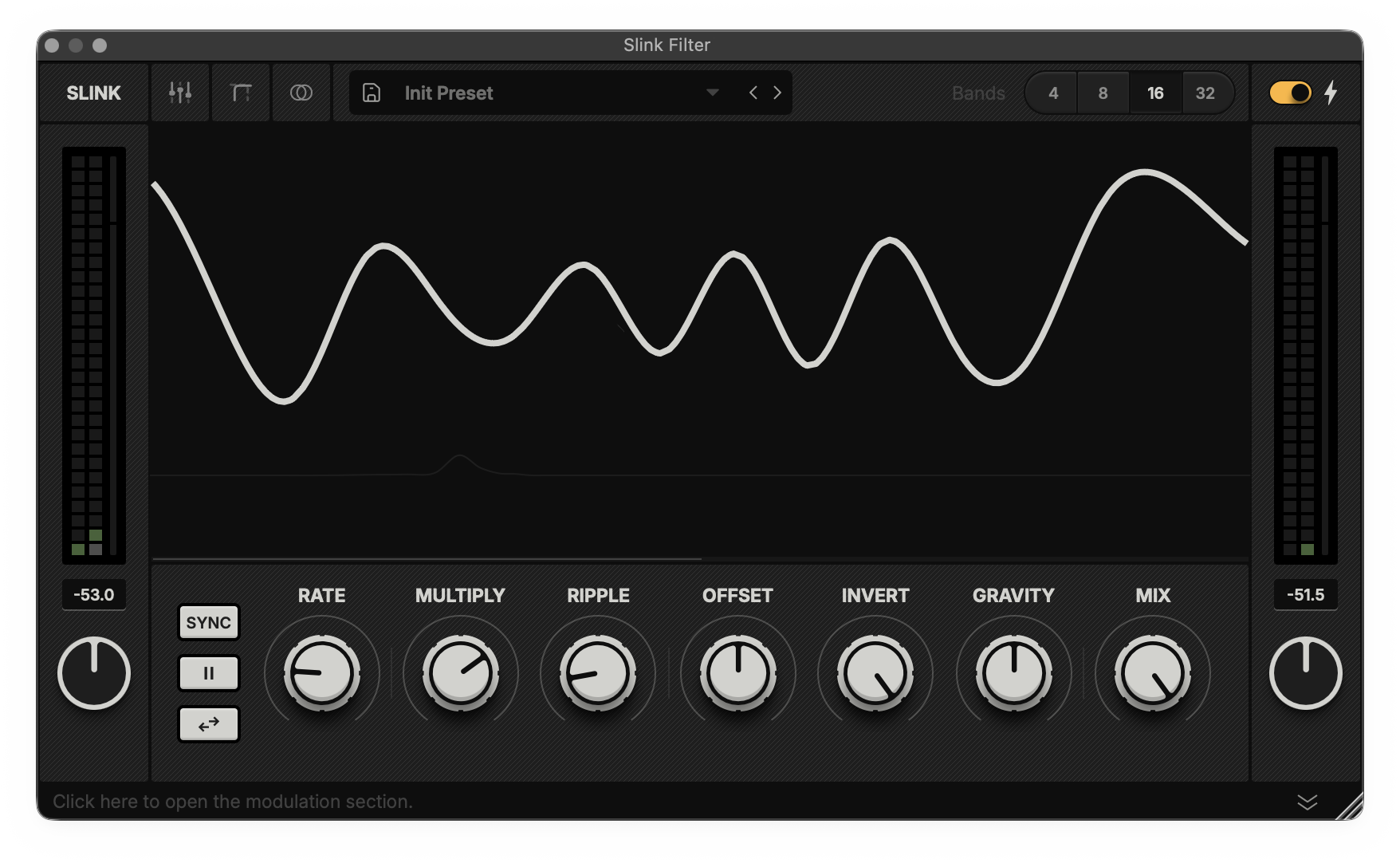
What Is Slink Filter?
Slink Filter is based on a unique spectral filtering algorithm created by Michel Iseneld (Hypnus Records) and Alexander Berg (Dorisburg). Instead of traditional filter curves, it splits your signal into frequency bands and lets you manipulate them individually — creating movement and textures that conventional filters simply can't produce.
1. Selectable Filter Bands
The Max for Live version was locked to a fixed band count. The VST gives you a choice: 32, 16, 8, or 4 bands. Fewer bands means broader, more dramatic filtering. More bands means surgical, detailed control. This alone changes the character of the plugin completely depending on your use case.
2. Analog Filter Mode
New to the VST: an analog filter mode that adds warmth and saturation to the filtering process. The resonance behaves differently here — less clinical, more musical. For techno, this is exactly what you want. It sits in the mix without that digital harshness.
3. Individual Band Gain
You can now control the gain of each frequency band independently. This turns Slink from a filter into something closer to a spectral sculptor. Boost certain bands, cut others, create frequency-dependent dynamics that evolve over time.
4. Three New Modulation Sources
The modulation system got a serious upgrade:
- Envelope — Trigger-based modulation for rhythmic filtering
- Sequencer — Step-based modulation patterns
- Follower — Audio-reactive modulation that responds to your signal
All three feed into a modulation matrix, so you can route any source to any parameter. This is where things get deep.
5. Optimized DSP Engine
The entire DSP engine was rebuilt from the ground up by Geraint Luff (Signalsmith Audio). The result: significantly lower CPU usage compared to the Max for Live version. You can now run multiple instances without your session grinding to a halt.
6. Works Everywhere
No more Ableton lock-in. The VST version supports VST3 and AU, so it works in Logic, Bitwig, FL Studio, Reaper — whatever your DAW of choice is.
What You Should Know Before Buying
This is still early access (v0.2). There are no factory presets yet, and the UI will likely evolve. The current price is €65 (normally €85). It's DRM-free with a 30-day money-back guarantee.
Final Thoughts
This isn't just a port of the Max for Live device. It's a rebuild that takes the core concept and pushes it further. The selectable bands, analog mode, and new modulation sources make it genuinely more versatile. If you're into spectral filtering and sound design, this is worth your attention.