Hey everyone! I'm excited to share something different today - a collaboration I recently did with Oscar from Underdog Electronic Music School. If you're not familiar with Oscar's work, you absolutely should be. He's built one of the most comprehensive electronic music education platforms out there, focusing on everything from techno and house to electronica, all with an emphasis on practical, hands-on learning.
I had the privilege of visiting Oscar in Brussels for one of my gigs, and we ended up spending the day in his studio jamming and sharing techniques. What started as a casual session turned into an amazing learning exchange that Oscar captured for his YouTube channel.
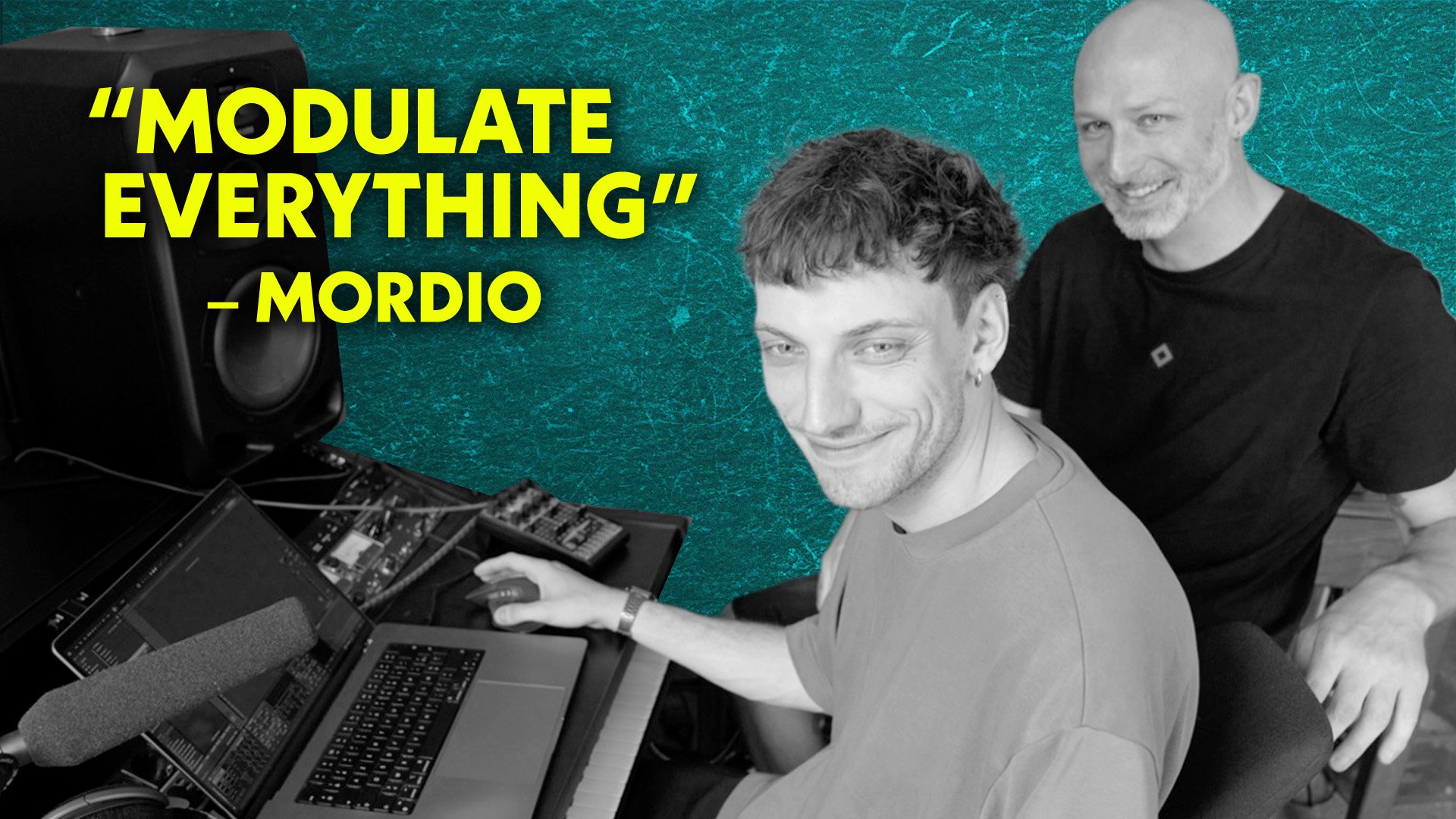
About Underdog Electronic Music School: Oscar provides structured courses, weekly free YouTube content, and breaks complex concepts down into digestible pieces.
What I love about Oscar's approach is how he balances the technical aspects of music production with artistic self-expression. His courses cover everything from foundation-level concepts for beginners to advanced deep-dive programs for producers ready to finish professional tracks.
The Session: From Hardware to Software: The collaboration happened naturally. I came to Brussels for a gig, and Oscar and I connected over our shared passion for electronic music production and YouTube.
We spent the day exploring different techniques - I was working with my Torso S4 & Ableton while Oscar was on the Modular System, and that's where the magic started happening.
Coming from my background with five years of hardware-only production before returning to Ableton, I've developed this obsession with modulation. When you spend years with Eurorack, you get used to being able to modulate absolutely everything. Going back to Ableton, my first thought was always
"Why can't I modulate this? Give me an LFO!"
That hardware mindset completely changed how I approach software production, and it's something I was excited to share with Oscar and his audience.
The Tools I Shared: During our session, I showed Oscar some Max for Live & VST devices that have become essential to my workflow:
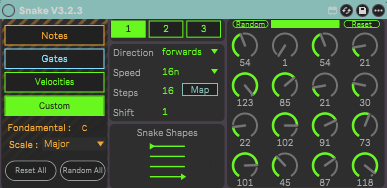
Snake Sequencer
The Snake Sequencer is one of those devices that perfectly bridges hardware and software thinking. Yes, it gives you standard sequencing with randomizable notes, gates, and velocities. But where it gets really powerful is in the custom mode.
By putting operators frequencies in fixed mode and using the three different randomizable patterns to modulate frequency parameters, you can create incredibly modular-sounding sequences. It gives you that step-sequenced feeling that's so natural in hardware but sometimes hard to achieve in software.
Sting
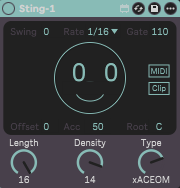
Sometimes you need something even simpler than Snake. Sting is a basic trigger generator that's perfect for quick techno loops. Eight steps, adjustable density, different random algorithms, swing, variable gate lengths - it's an instant inspiration tool that gets you making music instead of getting lost in menus.
Space Blender
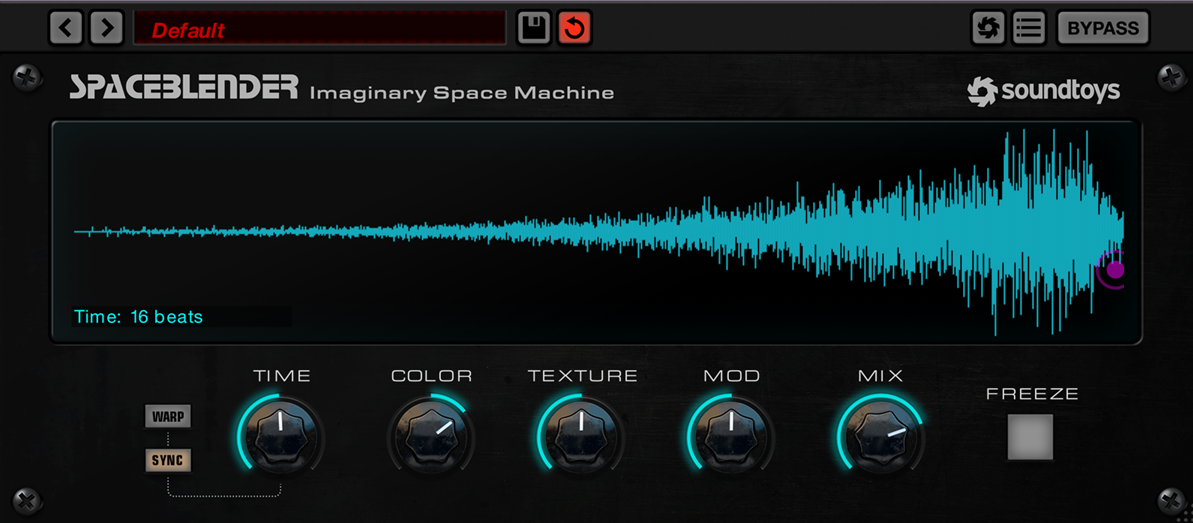
This was a recent discovery that I was excited to share. Space Blender is a hybrid between delay and reverb that uses convolution processing in a unique way. Instead of traditional reverb calculation, it plays convolution information like a sample.
The visual feedback is incredible, and the range of textures you can create - from super short sound design layers to ambient textures that stretch up to a minute - makes it perfect for the kind of atmospheric techno I love creating.
Slink Filter
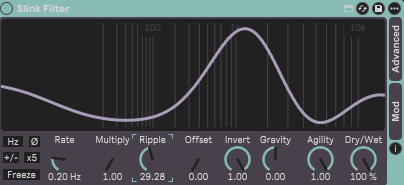
I couldn't believe Oscar hadn't discovered Slink Filter yet! It's a water-based filter with ripples that you can multiply and sync. Even when it's static, you get this beautiful frequency diagram that works almost like a visual EQ.
The modulation possibilities are endless. I love using it with envelope followers to create filters that react to your audio input, giving you that natural, musical movement that stays locked to your groove.
The Triangle Method Enhanced: What made this collaboration especially interesting was how it connected to Oscar's "Triangle Method" - his approach to sound design where you work with three components: sequence, sound source, and effects chain. You bounce between making changes to these three elements until you hit a sweet spot.
My contribution was emphasizing the modulation layer that sits on top of all three components. Once you have a sequence, sound source, and effects that you like, that's when you start modulating all these elements to make them interact in symbiotic ways.
It's about creating systems that have life and movement, rather than static elements. The hardware world taught me that modulation isn't just an effect - it's what makes music feel alive and organic.
Why This Collaboration Matters: This session with Oscar highlighted something I think is crucial for the electronic music community: we need to keep sharing knowledge and techniques across different approaches and backgrounds.
The fact that Oscar creates both free YouTube content and deeper structured courses means he's genuinely committed to education, not just content creation. That's something I really respect and want to support.
Watch the Full Session: The complete tutorial is available on the Underdog Electronic Music School YouTube channel. You'll see the full context of our jam session, get detailed explanations of all the devices I mentioned, and hopefully pick up some techniques you can apply to your own music.
If you're not already subscribed to Oscar's channel, I highly recommend checking it out. His approach to electronic music education is thorough, practical, and inspiring.
Collaborations like this remind me why I love this community so much. Whether you're working with hardware or software, making ambient textures or driving techno, the core principles of modulation, experimentation, and musical interaction remain the same.
Oscar and Underdog Electronic Music School represent exactly the kind of educational approach our scene needs - combining technical knowledge with artistic exploration, making quality education accessible globally, and fostering genuine community connections.
Thanks to Oscar for having me on the channel, and thanks to everyone who engages with educational content like this. Keep experimenting, keep learning, and keep making music that moves people.
Check out the full tutorial on the Underdog Electronic Music School YouTube channel. And if you want to dive deeper into the modulation techniques I use, you can find more detailed breakdowns on my own channel and in my Hypnotic Techno Essentials Pack.