The Underrated Secret That Makes Great Music
Let's be honest – we've all been there. You spend hours tweaking that perfect kick drum, designing that killer synth patch, and arranging your track... but something still feels off. Your drop doesn't hit hard enough. The energy doesn't flow right.
Here's the thing: it might not be your sound design that's the problem. It's probably your contrast.
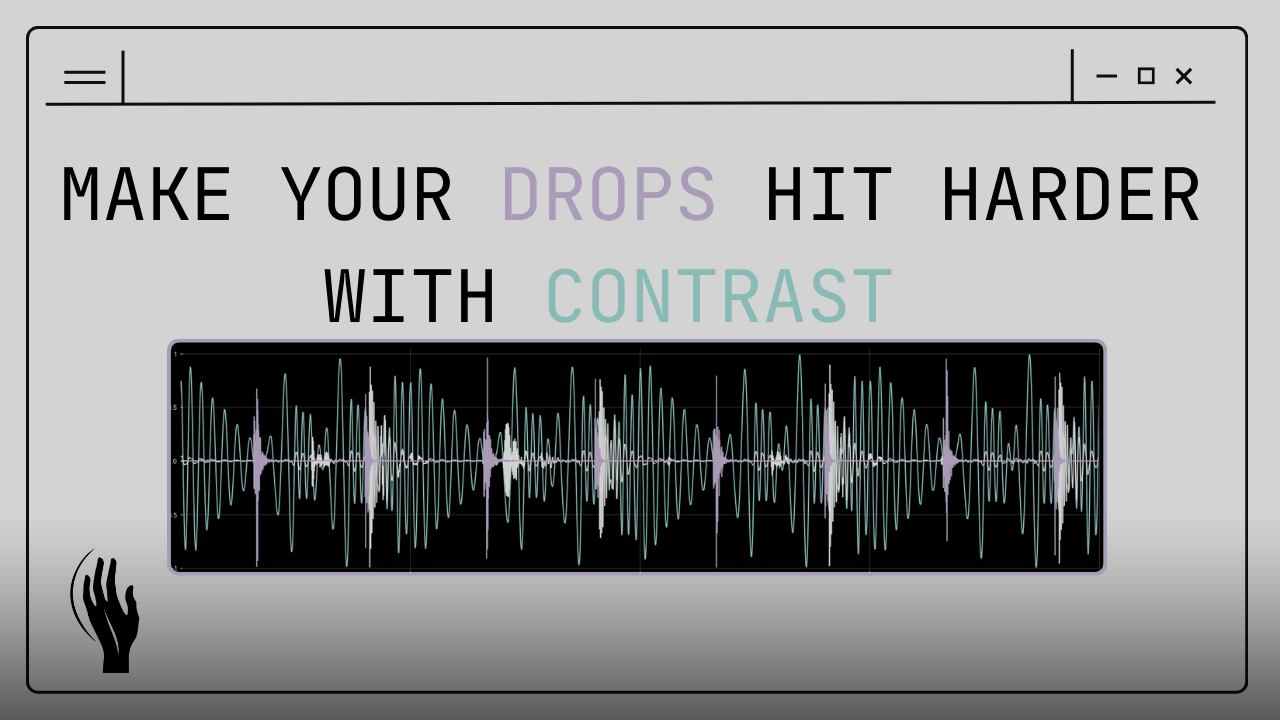
Why Nobody Talks About Contrast (But Should)
Most producers obsess over the wrong things. They think the solution is always "make it louder" or "add more elements" or "buy another plugin."
But I've learned after 15+ years of producing that what makes tracks memorable isn't just great sounds in isolation – it's how those sounds interact and create space for each other.
Contrast is that secret sauce. It's not some abstract concept – it's a practical tool that transforms good tracks into tracks that people remember.
The Five Types of Contrast You Need to Master
After analyzing hundreds of tracks and experimenting in my own productions, I've identified five specific types of contrast that you can start using today:
1. Dynamic Contrast
This isn't just about loudness – it's about emotional flow.
When everything in your track is loud all the time, nothing feels impactful. But when you pull back before your drop – even just for 4 beats – the payoff hits so much harder.
Try this: Automate a volume dip right before your drop. Just a quick 2dB reduction on your master can create that "breath" moment that makes the following section feel massive.
2. Frequency Contrast
Your ears love change. When frequency content shifts, our brains perk up.
One technique I love: Use a full-frequency element like white noise in your build-up, then suddenly filter it out when the drop hits. This creates a vacuum that makes your bass and kick feel ten times more powerful when they enter.
3. Density Contrast
This is about balancing busy and sparse sections.
Think about it – if your track is a wall of sound from start to finish, there's no journey. No story. Mix dense, chaotic sections with moments of simplicity. Your listeners' ears will thank you.
In Ableton, try this: Create an audio effect rack with a Chain Selector that alternates between your full arrangement and a filtered version with fewer elements. Map it to a macro and record automation that switches between them.
4. Spatial Contrast
This is criminally underused. Play with stereo width!
I often keep my kicks centered but push my hi-hats wide. When these elements alternate, they create a push-pull feeling that's weirdly addictive to listen to.
Quick tip: Use the Utility device in Ableton to automate width between sections. Going from mono to stereo (or vice versa) creates an instant feeling of expansion or focus.
5. Texture Contrast
Clean versus noisy. Dry versus wet. These opposites create interest.
Try following a noisy, reverb-heavy buildup with a super dry drop. That textural shift hits harder than any fancy sound design trick.
Seeing It In Action
I demonstrated this in Ableton with a 16-bar buildup and drop. The same exact sounds with and without contrast applied feel completely different.
The contrast version feels alive, while the non-contrast version – despite having "good" sounds – feels flat and boring.
All I did was:
-
Add a brief filter sweep right before the drop
-
Remove one element for 2 beats to create space
-
Add a single dry clap where previously everything was reverb-heavy
-
Narrow the stereo field briefly then expand it
Small changes, massive difference.
Why This Actually Works
Your brain craves novelty. When elements change, dopamine gets released – the same chemical that makes you feel good. Music that creates these contrast moments literally hacks your pleasure response.
Make It Your Own
This isn't about following rules. It's about understanding principles that you can apply in your unique way. Experiment with these five types of contrast and see what works for your style.
Remember: Great music isn't just about great sounds. It's about creating a journey.
What contrast technique are you going to try first? Let me know in the comments!
Want more production tips like this? Check out my Patreon for early access to my Signal Chain Stories podcast and exclusive feedback videos for your tracks.